A Secret Biological Intelligence Program

In 2007, the same congressional committee that years later refused to transfer authority for the clean up of West Lake Landfill to the U.S. Army Corps of Engineers, investigated the awarding of a Homeland Security bio-surveillance contract to SAIC, the giant defense contractor.

IMG_3680

Leidos offices in St. Louis at 2327 South Grand Blvd.

 During President George W. Bush’s administration, the House Committee on Energy and Commerce announced an inquiry into the National Bio-surveillance Integration System, an intelligence gathering operation of the U.S. Department of Homeland Security administered by the Science Applications International Corp. (SAIC).

The House committee was then apparently interested in whether the bidding process was rigged.

In 2013, SAIC spun off a large portion of its classified government work by forming another company, Leidos. Both SAIC and Leidos have received  multi-million-dollar contracts to do clean up work  for the  U.S. Army Corps of Engineers Formerly Utilized Site Remediation Program (FUSRAP) in St. Louis, including the continuing cleanup of Coldwater Creek in North St. Louis County.

In addition to its environmental engineering component, Leidos is the largest private cyber espionage outfit in the nation with estimated government contracts worth $60 billion. The company employs 80 percent of the private-sector work force engaged in contract work for U.S. spy and surveillance agencies, including Homeland Security, the CIA and NSA.

Leidos also has a contract with the Missouri Department of Natural Resources through its  federal facilities management division.

The earlier creation of the National Bio-surveillance Integration by Homeland Security through its contract with SAIC has received little subsequent attention. The program was authorized by President George W. Bush under Presidential Directive 10. Its stated mission was “to provide early detection and situational awareness of biological events of potential national consequence by acquiring, integrating, analyzing, and disseminating existing human, animal, plant, and environmental bio-surveillance system data into a common operating picture,” according to the Department of Homeland Security.

The Department of Homeland Security further describes the classified program as follows: “The National Biosurveillance Integration Center (NBIC) integrates, analyzes, and distributes key information about health and disease events to help ensure the nation’s responses are well-informed, save lives, and minimize economic impact.” 

Spurred by the outcries of concerned residents about potential health problems associated with chronic exposure to radioactive waste, the St. Louis County Health Department in conjunction with the federal Agency for Toxic Substances and Disease Registry have taken an active interest in the radioactive waste issue in the St. Louis region.  Whether Homeland’s Bio-Surveillance operation is monitoring conditions in St. Louis independently or with the cooperation of these other government agencies remains unknown.

Other community activists have long advocated taking away the control of the West Lake Landfill Superfund site in Bridgeton, Mo.  from the EPA and putting it under the control of the Corps of Engineers FUSRAP program, which has authority over the other St. Louis area radioactive sites.  But despite bi-partisan support of the St. Louis area congressional delegation, a bill slotted to shift control died in the House Committee on Energy and Commerce last year.

The West Lake Landfill Superfund site is owned by Republic Services Inc., the second-largest waste disposal company in the U.S. The company’s chief spokesman is Russ Knocke, a former top spokesman for the Department of Homeland Security.

The presence of a top-secret operation inside an AT&T building near West Lake Landfill in Bridgeton adds another murky hue to an already cloudy picture. The facility is presumed to be controlled by the National Security Agency but may house some other unknown government covert operation.


What You Don’t Know About the Missouri Department of Natural Resources

Cadmus Group, the private EPA contractor that hosted a series of meetings for MDNR related to planning the state’s future energy policies, is now a major national security consultant, and some of its execs have past ties to British Intelligence.    

The Missouri Department of Natural Resources hired Cadmus Group, a consulting firm with longstanding ties to the EPA, to hold a series of public meetings across the state in October and November 2011. The gatherings in Rolla, St. Louis, Kansas City and Columbia  convened with little fanfare,  bringing together various energy sector stakeholders to establish the groundworks for future energy policy development in the state. The mix included representatives from utility companies, state and local government agencies and environmental groups.

At the time, attorney G. Tracy Meehan III, a former director of the Missouri Department of Natural Resources, served as a principal officer in Cadmus Group.  He is a graduate of Saint Louis University Law School. Meehan served as an assistant administrator for water at the EPA in President George H.W. Bush’s administration, and is currently an adjunct professor at George Mason University School of Law. He  also sits on the  Committee on the Mississippi River and Clean Water Act of the National Research Council.  Meehan was previously a member of the council’s Water Science Technology board. He headed the MDNR between 1989 to 1992 under Republican Gov. John Ashcroft, who later served as U.S. Attorney General under President George W. Bush.

1577photo

G. Tracy Meehan III

Cadmus Group, founded in 1983,  is  EPA’s prime climate change consultant with offices in Arlington, Va.  The company is named after the mythological Phoenician  prince who brought the alphabet to ancient Greece. Cadmus’ operations expanded over time and by 2012  boasted annual revenues of $69 million.

In 2016, Cadmus diversified by  buying Obsidian Analysis, a Washington, D.C.-based  national security consulting firm, which had an annual revenue of $29 million at the time of the sale.  A month before the merger was announced in February 2016 veteran CIA analyst Christopher Savos joined Obsidian Analysis’ management.

The co-founders of Obsidian Analysis are Kevin P. O’Prey and Matthew K. Travis, who formed the company in 2010. Travis was formerly president of Detica Inc., originally founded in 1971 as Smith Associates, a UK government research and defense contractor. The company now focuses on cyber intelligence gathering. It acquired DFI International, a U.S. homeland security consulting firm in 2007. DFI’s board of directors was stacked with  retired U.S. military brass and a its lawyer was formerly general counsel to the CIA. Oddly, The firm’s website appears to be an English translation based on German text.

O’Prey is former president of another branch of the same company, DFI Government Services. Detica was  purchased in 2008 by British defense giant BAE Systems and is now called  BAE Systems Applied Intelligence. 

Travis and O’Prey, the founders of Obsidian Analysis, are now vice-presidents of Cadmus Group — the EPA’s climate change consultant.

In 2006, DFI Government Services, the branch then headed by O’Prey, hired retired U.S. Air Force Lt. Gen. James Clapper to head its defense program. Prior to joining DFI, Clapper served as the director of the National Geospatial Intelligence Agency, which has its main headquarters in St. Louis. Earlier in his career he had been director of the Defense Intelligence Agency

In 2010, President Barrack Obama appointed Clapper to be the Director of National Intelligence, which oversees all the spy agencies, including the CIA and the National Security Agency. Clapper resigned from that post in January.

In 2013, Clapper came under criticism for allegedly lying to Congress about whether the NSA tracked telephone data of millions of American citizens. The allegations against Clapper were raised after CIA contractor Edward Snowden revealed that the NSA was engaged in wide-scale surveillance operations. Snowden is now living in exile in Russia.

director-of-national-intelligence-james-clapper-closeup-AP

Lt. Gen. James Clapper

The lines between environmental regulation and espionage have blurred.  Internet and telephone snooping are being carried out under the guise of national security. The same companies involved in dealing with terrorism threats are also involved in water quality and climate-warming issues. It is becoming increasingly difficult to figure out where one field of interest begins and the other ends.  Cadmus Group, the same company that facilitated energy-related seminars for the state of Missouri,  employs intelligence specialists in its highest ranks.

It appears as if the so-called “deep state” is embedded in the “show-me” state.

The British Invasion

In 2010, Griffin Services, a subsidiary of an English defense contractor, showed up inexplicably in a Google map search of Arnold, Mo.

There has been a lot of jokes lately concerning President Donald Trump’s allegations that British intelligence spied on him at the request of the Obama White House. No evidence so far comes anywhere near confirming his claim.

But there is little doubt that the British secret service operates in the U.S. Moreover, the Brits’ intelligence operations can pop up in the most unexpected of places, far from the corridors of Trump Towers.

In 2010, for example, Washington Post reporter Dana Priest did a mind-blowing series on the number of top-secret U.S. government sites that operate domestically in virtually every state. Her extensive list of classified locations included one in Jefferson County, Mo., which is part of the St. Louis region.

Priest didn’t reveal the name of the agency operating in JeffCo., but  did mentioned that it was located in the town of Arnold near a Target store. With some searching I was able to pinpoint the location using Google map.

The site Priest was referring to is the location of the Geospatial Intelligence Agency, formerly referred to as the Defense Mapping Agency. The agency’s presence is no secret in St. Louis, of course. The building of a new facility for agency in North St. Louis has been the subject of public discussions in the last year.

But dig this: In 2010, the Arnold headquarters of the Geospatial Intelligence Agency was listed instead by Google map as being the location of Griffin Services.

Griffin Services it turned out is a subsidiary of a private British intelligence company — VT Group. VT stands for Vosper Thronycroft, which used to be a big British shipbuilder. In 2010, VT Group merged with Babcock International, another spooky private British defense contractor. Babcock is the former Babcock & Wilcox, which built boilers for the British Navy, when the sun never set on the British empire. BWXT Nuclear Operations Group is a subsidiary of Babcock International.

VT Group purchased Atlanta-based Griffin Services in 2001. At that time, Griffin had an estimated $300 million in U.S. government contracts specializing in military facilities management.

The French Connection

21st Ward Alderman and St. Louis mayoral candidate Antonio French, founded now-defunct Public Defender.

21st Ward Alderman and St. Louis mayoral candidate Antonio French, founded now-defunct Public Defender.

In 2002, I wrote a laudatory profile of 24-year-0ld publisher Antonio French, the founder of the now-defunct Public Defender newspaper. French is currently running for mayor of St. Louis. 

Young Journalists Launch Leftist Alternative Weekly

By C.D. Stelzer

first published in the St. Louis Journalism Review. October 2002 

Antonio French, the 24-year-old editor of , sees the role of his new weekly alternative newspaper more like a campaign rather than a business. The idea of founding a newspaper out of idealism nowadays may sound naïve, but French possesses a wealth of business acumen and political expertise for his age.

At age 19, while still an undergraduate at Auburn University, he secured a bank loan and opened a café.

“I owned a bar before I was 21,” he said, smiling. I couldn’t drink, but I was selling it.”

In early 2000, he returned home, drawn back to St. Louis by his family’s roots. R.C. French, his late grandfather, served as the first black marshal in St. Louis. His grandmother remains 21st Ward committeewoman. After his return, it didn’t take long for him to become involved in civic affairs himself.

“St. Louis has a lot of problems,” French said. “I decided if I’m going to be here, and make this my home, I’m going to roll up my sleeves and try to fix it.” French initially took a job as field coordinator for the Missouri Voters for Free Elections, an ad hoc group that was backing a referendum on campaign finance reform.

His experience in that unsuccessful ballot initiative, nevertheless, spurred him to pursue a political career. He formed a consulting firm, A.D. French and Associates. “My first gig I lucked out,” he said. “I managed Missouri State Sen. Wayne Goode’s campaign in the 13th District.”

He followed that victory by handling Pat Dougherty’s successful bid for state senate in the 4th District. Unfortunately, French said he became disillusioned with the electoral process after running the 21st Ward aldermanic campaign of Melinda Long. “That’s when I really got fed up,” he said.

Seeking reform through the backing of one candidate seemed futile and ineffective to French. He also began to question ceding power to candidates who, after being elected, demonstrated no accountability to constituents. “In my ward, and in a lot of other Northside wards, and, really, in a lot of St. Louis – there is no political culture for average citizens.”

So by his early 20s, French had already learned the reality of political campaigns in St. Louis. Over the next year, he expanded his knowledge to the state level, working as a legislative aide for the Department of Corrections (DOC) in Jefferson City. That experience provided French with another unsettling insight: “I learned lawmakers don’t make laws – lobbyists make laws,” he said.

During his stint at the DOC, French began working under Dora Schriro, a relatively progressive administrator in the field of prison management. After she left the post, he grew increasingly less satisfied with his position.

Last year [2001], after Sept. 11, he volunteered to join military intelligence, but the Army denied him security clearance.

That rejection led him to seek other ways of fulfilling civic obligations closer to home. Instead of just slapping an American flag decal on his car, French started examining political debates on the local level. The community problems that garnered his attention included legislative redistricting, public financing of the proposed downtown baseball stadium, state budget cuts and downtown architectural preservation.

French noticed that the mainstream, black and alternative media had one thing I common: All of them seemed to ignore the most relevant public concerns. “They really weren’t asking the questions,” French said. “The really weren’t promoting the opinion that was predominant among poor people – average folks.” For instance, he asked, why not save tax revenue by refurbishing the existing baseball stadium instead of helping to finance a new one? In the same vein, why tear down the Century Building – a 100-year-old architecturally significant gem, for a parking garage?

Originally, French considered putting together an investment group to buy the venerable Argus, St. Louis’ oldest black newspaper. But he decided a new name and identity would better serve the platform he wanted to create for his fledgling publication.

Although it features urban stories on social and political injustice, Public Defender is not exclusively dedicated to black issues. Instead, the publication’s viewpoint, like its staff, represents the multi-ethnic and racial diversity of St. Louisans, a generation who are adamant about bringing about change. “The defining characteristic,” French said, “is we want St. Louis to be a great place. We know it can be. And we are completely frustrated that the folks in charge right now are not steering it in the direction to make it so. There has got to be a reason why so many talented people are working on a project basically for nothing. Nobody is getting paid what they are worth, and most people aren’t getting paid at all, including me. But we’ve all got talent, and we’ve all got heart, and I think that’s contagious.” The new weekly has added 20 additional volunteers since the publication of its first issue, he added.

Staff writers include Elizabeth Vega, a former St. Louis Post-Dispatch reporter and Stefene Russell, a former writer for Stl.com.

There is nothing fluffy in the editorial style.

Although French anticipates more arts and entertainment coverage in the future, for the time being, well-written, hard news stories on city and downtown subjects dominate.

Subjects already covered include the dispute over home rule, the debate over the direction of public schools, neglect of Kiel Opera House and the killing of a youth by a police officer in North St. Louis. One exception to the strictly urban view was an analysis of a $378 million government contract awarded to Boeing to convert warheads into “smart bombs.” Regular features include an editorial by French; a column called By the Numbers, which emulates Harper’s Index; and a quick read called Simple Question. The Simple Question in the Sept. 19 issue, which occupied the centerfold, asked: “HOW MANY FUCKING PARKING GARAGES DO WE NEED???”

Public Defender’s number one editorial rule is “writing from the bottom up,” French said. In other words, the newspaper’s primary goal is populism – to give a voice to the disenfranchised. Other tenets include honest editorial content, a healthy skepticism of politicians and a dedication to readers’ rights over advertisers’ priorities.

To achieve these ends, French has adopted a Wal-Mart-style business plan. “Our expenses are super low,” he said. “I’ve been told we could not get this done without at least $50,000 to $100,000. Costs of production so far have amounted to only a small fraction of that estimate. He credits dedication and determination of the individuals involved in the endeavor for helping scale down the expense. “You can do this thing on a laptop,” French said. “All you have to do is pay for printing.” French is counting on the support of small businesses, which have been priced out of the market by other media, for advertising.

Public Defender’s first issue had a press run of 10,000 copies. Its second edition ran 15,000. French anticipates a circulation of 30,000 in the near future, and he is hiring a company to distribute the paper mainly at city locations and on college campuses.

“I don’t know if the keepers of the old guard understand the situation,” French said. “But there are folks out there who are willing to put their money and their energy into making this place a better place. We’re the manifestation of that – and we will be as long as we can. If this thing dies, it’s somebody else’s responsibility to do it again.”


The History of Pimping

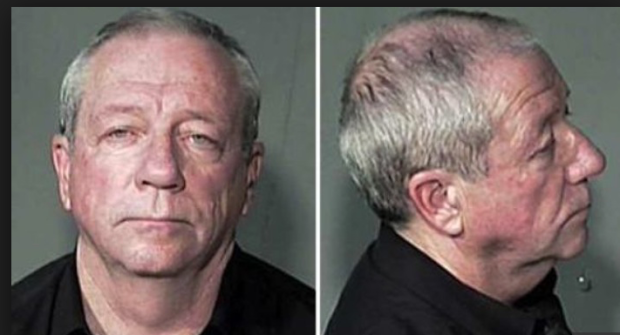
 When newspaper tycoon Mike Lacey,  former owner of the St. Louis Riverfront Times, was busted for pimping in California this week,  his arrest was long overdue. More than a decade earlier, a federal probe linked RFT sex ads to the Eastside rackets. 

[This story was first published in  January 2, 2004.]

screen-shot-2016-10-12-at-14-29-25

Mugshot of Mike Lacey courtesy of the Maricopa County Sheriff’s Department.

Pimping and Publishing, What’s the Dif?

Dennis W. Sonnenschein will have plenty of time to reflect on his business career over the next year. Yesterday (January 1, 2004), the St. Louis area massage parlor owner reported to federal prison to begin serving a one-year sentence for “misprision of a felony,” a charge similar to obstruction of justice.

In November, St. Louis Post-Dispatch staffer Michael Shaw reported that Sonnenschein was sentenced to a year in jail in federal court in East St. Louis. The court also ordered Sonnenschein to pay a $250,000 fine and give $1 million to Eastside charities. Sonnenschein must also hand over five parcels of property in Brooklyn, Ill., where the now-defunct Free Spirit Massage Parlor was located. Sonnenschein, who headed the A to Z Development Corp., admitted to the court that businesses located on his property were engaged in prostitution. The current owners of the sex businesses operating on his property were not charged. Although the property was listed in his estranged wife’s name, Linda Sonnenscbein wasn’t charged, either.

Sonnenschein, 59, has been engaged in the flesh trade since the 1970s, when he operated mobile massage parlors from the backs of vans in St. Louis County. Sonnenschein’s latest bust appears to have been part of a larger federal investigation into prostitution on the Eastside.

Assistant U.S. Attorney Stephen Clark indicated that the owners of Free Spirit advertised in Missouri publications from 1994 until 2000, the Post reported. Sonnenschein was indicted because the ads drew customers and prostitutes across state lines, which is a federal crime. The Riverfront Times publishes ads for the Eastside strip clubs and massage parlors every week. The time period investigated by federal prosecutors, 1994-2000, spanned the ownership change at the RFT. Hartmann Publishing, owned by Ray Hartmann, sold the newspaper to the New Times, a Phoenix-based chain, in late 1998.

But Sonnenschein’s trail extends further into the past. In September 1983, Post staffer Ronald Lawrence reported that one of Sonnenschein’s business associates was Fernando “Nando” Bartolotta, a made member of the St. Louis mafia family, then under the leadership of the late Matthew Trupiano. Less than two years later, on April 10, 1985, the St. Louis Globe-Democrat reported on the federal trial of Bartolotta in East St. Louis. Federal prosecutors had charged Bartolotta and another Missouri resident with conspiring to commit interstate transportation of stolen property. Testifiying against Bartolotta was FBI informant Jesse Stoneking, who the defense claimed had intimidated and entrapped the St. Louis organized crime figure. Bartolotta’s defense attorney was reported in the Globe as Andrew Leonard. An attorney of the same name — Andrew Leonard — was the longtime general counsel for Hartmann Publishing, the original owner of the RFT.

Stoneking, the informant who testified against Bartolotta and dozens of other St. Louis mobsters in the 1980s, died of an apparent suicide in Maricopa County,  Arizona a year ago (2003). The Chicago mob had allegedly put a $100,000 contract out on Stoneking’s life after he became an informant.

The Naked Truth

In 2002, after being fired from the Riverfront Times, I took a closer look at one of its primary moneymakers —  the sex trade. Mike Lacey, former owner of the paper, and a chain of other alternative weeklies, was charged this week with pimping in California. This is my original story. 

 

screen-shot-2016-10-11-at-20-01-49

Selling Sex is something Centreville, Ill. could live without.

by C.D. Stelzer,  Tuesday May 14, 2002

It’s eleven o’clock on a Friday night at the Crystal Palace in Centreville, Ill. Inside the bar, a young female dancer pulls her g-string aside to expose herself and thrusts her pelvis rhythmically within inches of the face of a very fat man seated at the edge of the stage. A disc jockey spins 70s rock music and shouts vulgarities into a microphone. Blacklights illuminate murals of nymphs with bouffant hair. Glittering globes dangle from the ceiling, casting spangles of swirling light. Strippers, with stiletto heels, strut around translucent columns of bubbling fluid the color of urine.

It all seems surreally retro except for the flesh.

In any given set, one or more of the four women on stage may engage in a series of escapades: spreading their thighs, caressing their breasts, simulating copulation on their hands and knees, or draping their legs over the shoulders of an admiring onlooker.

Across the road at PT’s Show Club, the master of ceremonies, a balding man, in a sports coat and tie, oversees a game that requires audience members to crawl between the legs of a line of bare-breasted women. The ostensive objective is “not to touch their koochie,” the MC says. As participants are eliminated, the women giggle and squat closer to the floor. Outside of the carnival-like atmosphere of these bawdy shenanigans, in the darkened aisle leading to the men’s room, another customer is receiving more private attention from a woman who is straddling his lap. Back in the limelight, the MC barks that a mere $5 entitles patrons to a handful of personal visits from a bevy of beauties.

Whatever is going on here has more to do with capitalism than eroticism. Millions of dollars a year are generated at such clubs — much of it in cold cash. Often “spas,” referred to in court documents as “brothels,” crop up near the clubs. Those profiting most are not women having $5 bills shoved down their g-strings. Men reap the handsomest rewards. They are or have been lawyers, police chiefs, elected officials, bankers, real estate developers, executives and publishers. They hale from Belleville, St. Louis or more distant locales: Miami Beach, Malibu, Denver and Phoenix.

Centreville’s commercial sex industry, at the junction of Illinois Routes 157 and 13, is not unlike clusters of skin trade in nearby Sauget, Brooklyn and Washington Park in St. Clair County. As is evident from the license plates of the pick up trucks, SUVs and muscle cars parked outside the Centreville clubs, the clientele come mainly from Missouri. In part, residents and visitors to St. Louis are drawn to these out-of-state establishments by provocative ads placed in the Riverfront Times, St. Louis’ weekly alternative newspaper. Indeed, quarter-page spreads, which cost as much as $475 a week, are the principal means of advertising the sexually-oriented enterprises.

Over the past decade, a series of federal indictments brought in the Southern District of Illinois have resulted in the conviction of topless club owners, businessmen and public officials on racketeering, prostitution, bank fraud, obstruction of justice and money laundering charges. In the most notorious case, federal prosecutors named a U.S. congressman as an unindicted co-conspirator. But a former federal official, with knowledge of the Eastside rackets, says there is nothing illegal about the Riverfront Times’ advertisements for Illinois strip clubs and massage parlors. If anything, he says, it’s just an ethical lapse on the part of the newspaper.

Given ample opportunity, RFT publisher Terry Coe declined to comment.

Bob Haida, the Illinois state’s attorney for St. Clair County, could not be reached for comment. A spokesman for St. Louis Circuit Attorney Jennifer Joyce says the prosecutor has no plans to investigate sex ads in the back pages of the alternative weekly. Ray Gruender, U.S. Attorney for the Eastern District of Missouri, says enforcement of prostitution laws is the responsibility of local authorities unless it involves crossing state lines. “Prosecutors don’t operate on coulds or shoulds or woulds,” adds Gruender. “We have to have evidence.” Even if the feds were conducting an inquiry into such matters, Gruender could not publicly discuss the subject, because that would violate Justice Department policies. In closing, however, the U.S. attorney made one thing perfectly clear: “I’m not going to dedicate my life to it.”

The mayor of Centreville offers a distinctly different attitude. For onwards of two decades, Frankie Seaberry has opposed the increasing number of adult nightclubs and spas in her city. As an alderman, she consistently voted against their proliferation and she continues to object to their presence as mayor. “We want to be a respectable community, where people want to come and live — not be known as the sex capital of Metro-East,” Seaberry says. “I resent that they feel that they can force their way in — and they couldn’t have forced their way in, if the (past) mayors hadn’t have gone along with them. They aren’t going to walk over me. I don’t care who they are — they are going to respect the city.”

Both the mayor and Centreville city attorney say the town’s three adult nightclubs and two spas have never been approved by the board of aldermen in accordance with a city ordinance passed in the mid-1980s. Besides PT’s and Crystal Palace, the businesses include Boxers `n’ Briefs (which features male dancers), the VIP Oriental Spa and Highway 157 Spa. “They all came in illegally,” says Seaberry. “By hook or crook, we looked up and there they were.”

In large degree, Centreville’s inability to determine its own destiny is tied to its paltry tax base. The population of the predominantly black community has dropped by more than a thousand over the last ten years, to about 6,000, according to the latest census. At the same time, household income remains locked at poverty levels. There are only 13 businesses in the city — five are sex-related ventures. Seaberry says Centreville has a hard time manning its police force because it can only afford to pay officers a little over $9 an hour. Last year, as a means to add to the city’s strapped coffers, Seaberry approved a measure that upped the local liquor license fee to $30,000, an increase of ten fold.

She didn’t stop there, however. The mayor also started scouring the city’s books. It didn’t take long for her to find a curious discrepancy. Seaberry discovered that state sales taxes due to the city from PT’s had not been paid for an indeterminate amount of time. Instead, the Illinois Department of Revenue sent the tax money to Piatt County in northern Illinois, where a small unincorporated village of Centerville is located. The upstate Centerville, with the different spelling, is so small it doesn’t even appear on road maps.

Illinois levies a 6.25 percent sales tax and is supposed to return one percent of the total to the municipality in which a business is located. Seaberry, who was elected mayor in 1999, says the snafu likely predates her administration and could have been going on for years. Without knowing how long the error continued, it is impossible to estimate the losses incurred by Centreville. At the very least, the misappropriation appears to have cost the city tens of thousands of dollars. If the diversion dates back more than a few years, the short fall would be exponentially greater. Under state law, sales tax data is kept confidential. Moreover, a state statute allows a municipality to recoup only six months worth of back taxes once a discrepancy is confirmed.

“Why shouldn’t people know how much sales tax businesses in their communities are paying?” asks Seaberry. When we found the mistake, they (the state) wouldn’t tell me how much was owed. In other words, it’s a kept secret.”

A spokesman for the Illinois Department of Revenue would say little more than Mayor Seaberry should be commended for catching the mistake, which he termed significant relative to the size of the city.

Last September, the mayor won another battle, when Crystal Palace backed off plans to sell. The prospective buyer, Deja Vu, owns a chain of clubs and competes with Denver-based PT’s, which operates at four Metro-East locations. Seaberry foiled the sale by opposing the transfer of the local liquor license held by Katrina Sanders. The license holder is the girlfriend of Robert Romanik, owner of the club. In 1997, Romanik pleaded guilty to obstruction of justice by lying to a grand jury investigating racketeer Thomas Venezia and his lawyer Amiel Cueto. Both men are currently serving lengthy federal prison sentences. Romanik, a former police chief of Washington Park, acted as a private investigator for Cueto. The three were involved in an earlier topless club in Centreville called Exposed.

At Cueto’s 1997 trial, Venezia’s former wife, Sandra Nations, claimed Romanik received a $50,000 pay off from her ex-husband as a part of the deal to open the club. Nations also testified Venezia gave then-Mayor John Robinson of Centreville a $1,000 bribe to approve the requisite licensing.

Romanik had his probation revoked in 1999, after federal prosecutors alleged he had illegally used straw parties to secure $1.5 million in loans from Magna and West Pointe banks to build the Crystal Palace and another topless bar, the Jewel Box, in Washington Park. He was sentenced to 20 months in federal prison and has since been released. As a part of his sentencing, the court ordered Romanik to sell his interest in the Crystal Palace, but that has been delayed because of Seaberry’s opposition to transferring the liquor license.

During his eight years as U.S. Attorney for Southern District of Illinois, W. Charles Grace oversaw the prosecution and conviction of organized crime figures in the Metro-East. The cases tried by his staff resulted in the closing of three topless bars and a massage parlor. But when he left office last May, he told the St. Louis Post-Dispatch that topless bar owners continued to evade taxes and protect their interests through payoffs and intimidation. “The region — and I mean the entire St. Louis region — will never become what it wants to become until we get a handle on corruption,” Grace said. “Wherever these clubs exist, they are taking advantage of a city government that is barely existing.”

The mayor of Centreville knows exactly what Grace is talking about. She lives with it every day. Asked whether she ever fears for her life, Seaberry says: “I thought about it, of course, knowing that I’m dealing with gangsters. The way I feel is that, if you’re going to run for office, you just have to take a stand — come what may. You can’t just let people grind you down.
“You know what I’m saying? The Lord will just have to take care of me or something.”

Some information in this story is based on St. Louis Post-Dispatch accounts written by Daniel Browning, Robert Goodrich, Charles Bosworth Jr. and Michael Shaw.
C.D. Stelzer is a former Riverfront Times reporter. Last year, after he announced plans to investigate some of the”adult entertainment businesses” that advertise in the RFT, he was fired.

Garbage, Gangsters and Greed

“Our Children and Our Children’s Children Will Be Tending This Lethal Garden, Forever.”

From 1991 to 1997, students of Fred Issek’s Electronic English class at Middletown High School in Orange County, New York recorded the history of the illegal dumping of toxic waste in their community, which culminated in the production of the documentary Garbage, Gangsters and Greed.

Abbie Hoffman’s Last Hideout

Changing Channels
Another Fight Over the Future of the St. Lawrence Seaway Looms
by C.D. Stelzer

Windows-Live-Writer-e82350c705ee_13C1F-Abbie Hoffman-8x6

In 2002, a travel-writing gig I scored landed me north of the border, where I toured the Thousand Islands in the St. Lawrence River. 

As the excursion boat traverses the Gananoque narrows, a pre-recorded voice launches into the history of the area, while sightseers lean against the ship’s rails and gaze in awe at the unfolding scenery. The voyage zigzags past island after island: Spits of land with granite outcropping and larger islands lined with summer cottages; cabins cloaked by spruce and castles rising from the shore. Vistas of green and blue drift by, merging earth, sky and water.

Tourists have been drawn to the beauty of the Thousand Islands of the St. Lawrence River for a long time. Beginning in the mid-19th Century, American tycoons built palatial resort homes throughout the 50-mile-long archipelago. The Astors and the Pullmans were followed by 20th Century entertainers and artists. Singer Kate Smith rested her pipes here. Crooner Arthur Godfrey came to escape the rigors of his network TV show. Irving Berlin composed Always at his island retreat.

Because the St. Lawrence acts as the boundary between the United States and Canada, island lore is also steeped in tales of assorted rumrunners, rebels and rouges. In the period following the War of 1812, pirates preyed on the British fleet. According to legend, a conspirator in the Lincoln assassination was murdered on Maple Island in 1865. During Prohibition, bootleggers used the islands as a haven for smuggling operations.

On board the excursion boat, the recorded raconteur recounts all these stories and more. One name conspicuously absent from the list, however, is the late Abbie Hoffman, who hid out on Wellesley Island from 1976 to 1980. Assuming the identity of environmentalist Barry Freed, the fugitive, anti-war activist organized opposition to a U.S. Army Corps of Engineers plan to open the St. Lawrence Seaway to wintertime navigation with the use of Coast Guard icecutters. If carried out, the project could have destroyed wildlife habitat and caused irrevocable damage to the fragile river ecology. Once reviled by the powers that be, the 1960s anti-establishment icon won accolades as Freed from President Jimmy Carter, New York Gov. Hugh Carey and Sen. Daniel Patrick Moynihan. More importantly, Save the River, Hoffman’s grassroots campaign, succeeded in stopping the plan.

More than a quarter century after Hoffman’s efforts, the Corps is now studying a larger scale project that Save the River and other environmental groups believe could have even more catastrophic consequences.

In May, The U.S. Department of Transportation and its Canadian counterpart approved the second phase of a 30-month, $20 million study to determine the future of the 43-year-old St. Lawrence Seaway and the entire Great Lakes transportation system.

The ongoing analysis, which received $1.5 million in funding from Congress this year, is considering enlarging 15 locks and deepening shipping channels to allow 1,000-foot ocean-going container vessels to travel more than 2,300 miles inland, from the Atlantic Ocean as far west as Duluth, Minn. The cost of completing the renovation over the next two decades is estimated at $10 billion.

Influential shipping and business interests in the U.S. and Canada argue such improvements will spur economic growth to the region. The 730-foot-long lakers that currently transport iron ore, grain and other products via the seaway comprise only 13 percent of world’s commercial fleet, according to industry sources. Advocates of the project say expanding the size of the locks and deepening the St. Lawrence Seaway’s channels from 26 to 35 feet will increase trade opportunities to keep pace with 21st-Century demands. They point to the 70-year-old Welland Canal between Lake Erie and Lake Ontario as an example of the seaway’s obsolescence. Inland ports of Chicago, Detroit and Cleveland would all serve to gain from modernization.

Opponents counter that projected economic growth in the upper Midwest is taking precedence over environmental concerns in the Corps decisions. Memories of the 1977 tanker crash that spilled hundreds of thousands of gallons of oil into the St. Lawrence near Wellesley Island have not been forgotten. Environmentalists say that dredging will only stir up contaminants and lead to further pollution. Underwater surges by larger ships would probably have a similar negative effects. Moreover, parts of the Thousand Islands will have to be blasted away to accommodate the wider channels. Further changes to the river could also lead to other problems, including the possible introduction on non-native species. In addition, dredging would most likely alter water levels in the Great Lakes, disrupting aquatic habitat and changing the lake temperatures. More than anything else, critics worry that the overall impact of such a project on the Great Lakes ecosystem — the largest reservoir of fresh water on the planet — is not being adequately addressed.

For its part, the Corps has assured environmentalists that their questions will be factored into its final evaluation. In its preliminary review the agency even acknowledged one of the risks already voiced by foes of the plan. “Currently low water levels in the Upper Great Lakes are also a critical factor, both in terms of environmental implications and in terms of the potential effects of wider locks and deeper channels,” according to a report issued by the Corps earlier this year. In short, the proposed engineering feat could make floating a boat in the Great Lakes more difficult instead of easier.

The Thousand Islands have captured the imaginations of travel writers since Charles Dickens steamed by them on his way from Kingston, Ontario to Montreal in 1842. How long they remain a source of inspiration remains to be seen. Next spring, the pleasure boaters and anglers will take to the waters again. Tourists will board the excursion boats at the river port of Gananoque, Ontario, as they have since early in the last century. They will lean against the ship’s rails once more and marvel at the splendor of the passing islands. The recorded recitation will be broadcast over the vessel’s loudspeakers as it is each year. Perhaps by then the tale of “Barry Freed” will be added to the mix.

Take Me to Your Campaign Chairman

ET wasn’t mentioned in the Democratic nominee’s acceptance speech, but Clinton’s campaign manager has an out-of-this world agenda.

images

Questions surrounding Hillary Clinton’s credibility keep surfacing. Her latest effort to shore up voter confidence took a curious turn earlier this week when the Clinton campaign accused her GOP rival of conspiring with Vladimir Putin. The Russians, according to Clinton camp, are meddling in domestic politics.

The claims were prompted by emails allegedly ripped off by Russian hackers and released by Wikileaks. The purloined messages reveal how the Democratic National Committee planned to sabotage the Bernie Sanders campaign.

In reaction, Clinton backers are accusing Republican candidate Donald J. Trump of fear mongering, but they themselves appear to be using dated Red Scare tactics to distract the electorate. It’s a page out of the Cold War playbook and enough to alienate voters of all persuasions.

These are trivial issues, however, compared to the longstanding concerns of  John Podesta, Clinton’s campaign chairman.

podesta_bio_photo

Podesta is an outspoken advocate for releasing classified data on UFOs.  Clinton herself was asked about the issue during the New Hampshire primary race in December and responded that she intended to get to the bottom of it once she was in the Oval Office. Clinton said she believed that the earth has already been visited by aliens, but nobody is sure. She reiterated her pledge to seek more governmental transparency in a late night appearance on the Jimmy Kimmel Show in March. On that occasion, Clinton informed the TV host that the term UFO is now an anachronism. ““You know, there’s a new name,” she said.  “It’s unexplained aerial phenomenon. UAP. That’s the latest nomenclature.”

During her husband’s presidency, Bill Clinton went on the record as saying he checked out top-secret Area 51 files and found no evidence of extraterrestrial visitations, but he wouldn’t rule out the possibility that they have or will occur.  The Clintons’ casual comments on the subject were initially not taken seriously. But that seems to have changed in recent months, mainly because there is little doubt that Podesta, their longtime confidante, is a serious true believer. In a Las Vegas television interview conducted in March, Podesta said  that Hillary Clinton assured him that if she wins the presidency she will expedite the release of classified documents pertaining to UFOs.

Podesta served as President Bill Clinton’s assistant and deputy chief of staff. He is also a Democratic lobbyist, and the founder with his brother Tony of the Podesta Group.   In 2014, Pedestal joined the Obama administration acting as a presidential counsel on global warming and climate change. When he left that post to join the Clinton campaign, he tweeted that his biggest regret was his failure to persuade the administration to declassify  UFO documents.

images-1


Tangled Up in Wildwood

Suburban builders plan to construct dozens of pricey houses on former hazardous-waste sites

first published in the Riverfront Times  (St. Louis) June 23, 1999, Wednesday

by C.D. Stelzer

The rugged land has resisted development for a long time, so a rural atmosphere still clings to these verdant hills, despite the encroachment of affluent subdivisions on the remaining ridgetop farms. But it would be wrong to think that nature has only now come under attack in this part of West St. Louis County.

Just off Strecker Road, in the gully washes that feed into Caulks Creek, the first of thousands of barrels of toxic waste were discovered nearly 19 years ago. The initial unearthing of the contaminated caches led one state environmental official to say at the time, “People move out here to escape pollution. This is where you find it, though.”

Eventually several hazardous-waste sites would be identified in the area by the U.S. Environmental Protection Agency. The federal agency would refer to them collectively as the “Bliss-Ellisville” site.

The first half of the name refers to Russell M. Bliss, the waste hauler responsible for dumping the pollutants. Bliss’ son still lives on a Strecker Road property once owned by his father, from which the EPA only a few years ago finally removed more than 900 truckloads of dioxin-contaminated dirt in addition to an estimated 1,500-2,000 barrels of toxic chemicals. The haul included drums laden with cancer-causing polychlorinated biphenyls (PCBs).

The second half of the site’s name is something of a misnomer, because the locations of the Bliss farm and the other hazardous-waste sites are all outside the Ellisville municipal limits. Nowadays, much to its chagrin, all of this tainted history falls under the jurisdiction of the city of Wildwood, which was incorporated in 1995.

Wildwood residents originally voted to approve the creation of the municipality to control development, thereby ensuring that greenspace would be preserved. Now the fledgling city faces a dilemma: Two developers are asking for zoning variances so that they can wedge dozens of high-priced houses on either side of Strecker Road — on parcels of land that were once part of the Bliss-Ellisville hazardous-waste site. The next meeting on the issue is scheduled for 7:30 p.m. Tuesday, July 6, at Wildwood City Hall, 16962 Manchester Rd.

The requests to develop these two properties have dredged up a litany of questions that have never been adequately answered by EPA officials or by the Missouri Department of Natural Resources (DNR). Those same officials are now siding with the developers, claiming that the once highly contaminated land is no longer a threat to human health, that it is now safe enough for backyard swingsets and tomato patches.

If the city allows W.J. Byrne Builders Inc. to build Strecker Forest, 31 houses will be constructed on the 18.5-acre tract. As things stand, Byrne Builders holds an option to buy the land from its current owners, Gerald and Patricia Primm. The couple’s property is adjacent to the Bliss farm. An early EPA investigation found portions of the Primm property and three other adjacent parcels to be contaminated.

On the other side of the road, at 210 Strecker Rd., developer Larry Wurm of James Properties Inc. is proposing to build Wildwood Ridge, an 11-home development on 7.6 acres of land now owned by Jean Callahan. Her husband, Grover Callahan, worked as a truck driver for the Bliss Waste Oil Co. in the early 1970s. Before Times Beach — the most notorious of the sites contaminated by Bliss — became a household word, the EPA had already rated the Callahan property one of the most contaminated hazardous-waste sites in the nation. Although the state hastened to dispose of hundreds of barrels at the Callahan site in the early 1980s, the EPA did not close its case on the property until last September.

Wildwood currently zones the Strecker Road properties as “nonurban,” which requires a minimum lot size of 3 acres. When considering deviations from the existing zoning code, the city takes into account several factors, such as the availability of utility services, topography and road conditions, but nothing on the municipal books deals with building houses on top of former hazardous-waste sites.

“It’s a difficult position for the city,” says Joe Vujnich, Wildwood’s director of parks and planning. “We do not have the expertise that the U.S. EPA and Missouri Department of Natural Resources have. Obviously I have to depend upon them to do their job and hope that we do ours.”

Among those who doubt the EPA’s blanket endorsement is Tammy Shea, a Wildwood resident. “If they’re going to develop the Callahan property, then we need to know exactly what took place there. The version that the developer presented to Wildwood is pretty vague about what happened,” Shea says. “It’s very confusing, the fact that they’ve kind of lumped these properties together yet dealt with them differently. Why were they in such a hurry to clean up the Callahan site? They were in there in 1981, pulling out barrels and treating them differently from the rest of the waste. They didn’t take the barrels from the Bliss farm until 1996, when the incinerator was here. So why were they in such a rush to get the barrels off the Callahan property?” asks Shea.

As for developer Wurm, he believes the Callahan property has been cleaned up, but he’s counting on the findings of state and federal regulators to protect him against any future liability.

“It’s no problem. It’s clean as a whistle,” says Wurm of the Callahan property. “It’s clean as a whistle,” he repeats. “Look at the record of decision. I’ve got letters from EPA and DNR also stating that everything is cool on the property.” But Wurm says he doesn’t want to discuss the project in detail, fearing his plans will be misrepresented. “When I talked with the (St. Louis) Post-Dispatch, I got misquoted. It was an abortion. So I’ll just let the record of decision stand for itself, OK? Tom What’s-his-face at the Post-Dispatch, he didn’t have time. He didn’t want to look at all this shit. And blah, blah, blah. You got to do your homework on these pieces, otherwise you’re wasting your time.

“Nothing against journalists — some of them are my best friends,” Wurm adds.

Wurm is referring to Tom Uhlenbrock, who first reported the Wildwood development plans in the St. Louis Post-Dispatch on June 11. Asked about Wurm’s criticism, Uhlenbrock says the developer was “bent out of shape because he wanted the article to say that the Callahan property never had any dioxin or Russell Bliss on it.” Uhlenbrock said he was unable to confirm whether dioxin had been found on the site or whether there was a Bliss connection to the property.

In 1994, the Post-Dispatch reported a dispute involving homebuyers in Turnberry Place subdivision, which abuts the Bliss farm. The buyers said they signed sales contracts without being told by their real-estate agents that their new homes were adjacent to a hazardous-waste site. Seven families sued the responsible Realtor, and they were awarded a cumulative settlement of more than $500,000. If the city approves their respective developments, Wurm and Byrne hope to avoid this legal pitfall by having buyers sign a disclosure form saying that they were told in advance of the land’s history.

The full history of the Callahan site and the others in the Caulks Creek watershed remains something of an enigma. Contacted by phone last Friday at EPA headquarters in Kansas City, Martha Steincamp, regional counsel for the EPA, could not provide details on the Bliss-Ellisville cleanups and referred all questions on the matter to Bob Feild, the agency’s project manager. Feild did not return phone calls.

From publicly released EPA documents, this much is known: In the winter of 1981-1982, the DNR and EPA excavated more than 1,200 barrels of toxic waste from the Callahan property. The cleanup crew immediately sent 592 drums to a landfill in Wright City, Mo., but more than 600 barrels were stored on-site, along with 500 cubic yards of soil. The EPA removed the remaining barrels in July 1983. The agency then backfilled the hole with the same soil that had been stored at the site. A Post-Dispatch story dated April 4, 1983, describes the 500 cubic yards of soil stored at the Callahan site as being “contaminated.”

A later EPA inspection showed that the land had subsequently subsided and would require stabilization. Despite evidence of erosion, the EPA’s investigation concluded that the “fill area of the Callahan subsite was not contaminated (and) that the original objectives of the remedial action had either been achieved through natural processes, or were no longer considered necessary due to the preference expressed by the site owner.”

Aside from groundwater contamination, the most serious threat to human health posed by the contamination at the Callahan site was airborne migration, according to the EPA. It would be better to err on the side of safety, says Shea, than risk exposing people to more hazardous waste by digging foundations on the Callahan property and inadvertently excavating a heretofore undetected layer of toxic waste. “I believe that the whole area there is littered with contamination pockets,” she says. “Sometimes it’s just best to leave well enough alone.”

Shea is being dismissed as an alarmist. Wildwood city officials have questioned her credentials, and she says a real-estate agent recently criticized the motives behind her activism. In both instances, the allegations were not based so much on environmental concerns as they were on the bottom line.

“I guess Wildwood is just going to have to look at it from a credibility standpoint,” says Shea. “What I’m going to ask is that they provide the citizens with some level of accountability, because we certainly aren’t getting it from the EPA and we shouldn’t have to depend on the developer to provide it.”

By the EPA’s count, the Bliss-Ellisville site contained at least seven separate waste-disposal locations. Sewer workers discovered the first batch of barrels on the property of the Rosalie Investment Co., near the intersection of Strecker and Clayton roads, in July 1980. The Callahan dump was discovered in August of that year.

Callahan started working for Bliss in the early 1970s, which would have been around the same time Bliss started hauling hazardous waste. After the discovery of the waste a decade later, Callahan testified in St. Louis County Circuit Court that he had used a lift truck to dump drums of waste, which Bliss had picked up at local industries, on the Callahan property. DNR officials described the location of the dump as a ravine, filled 15 feet deep with rusty barrels.

Three parties — Jean Callahan, Kisco Co. and Bliss — refused to pay for the cleanup. By 1982, the Missouri attorney general’s office had entered negotiations with two other firms, American Can and GK Technologies. Ultimately, the state accepted $94,000 in 1988 as its part of a $660,000 settlement with several companies, a fraction of the estimated overall cleanup cost.

The biggest fish appears to have either slipped off or broken the line, however. In September 1980, Gov. Joseph P. Teasdale wrote a letter to Monsanto chairman John W. Hanley, requesting that the St. Louis-based chemical company pay for the cleanup. In his bid for re-election that year, Teasdale also made a campaign stop at the Bliss-Ellisville site to again ask for Monsanto’s assistance. This time Teasdale made the plea with the TV news cameras rolling. Monsanto refused to consider the governor’s appeal, even though before a federal ban on the chemical the company had been the sole producer of PCBs in North America.